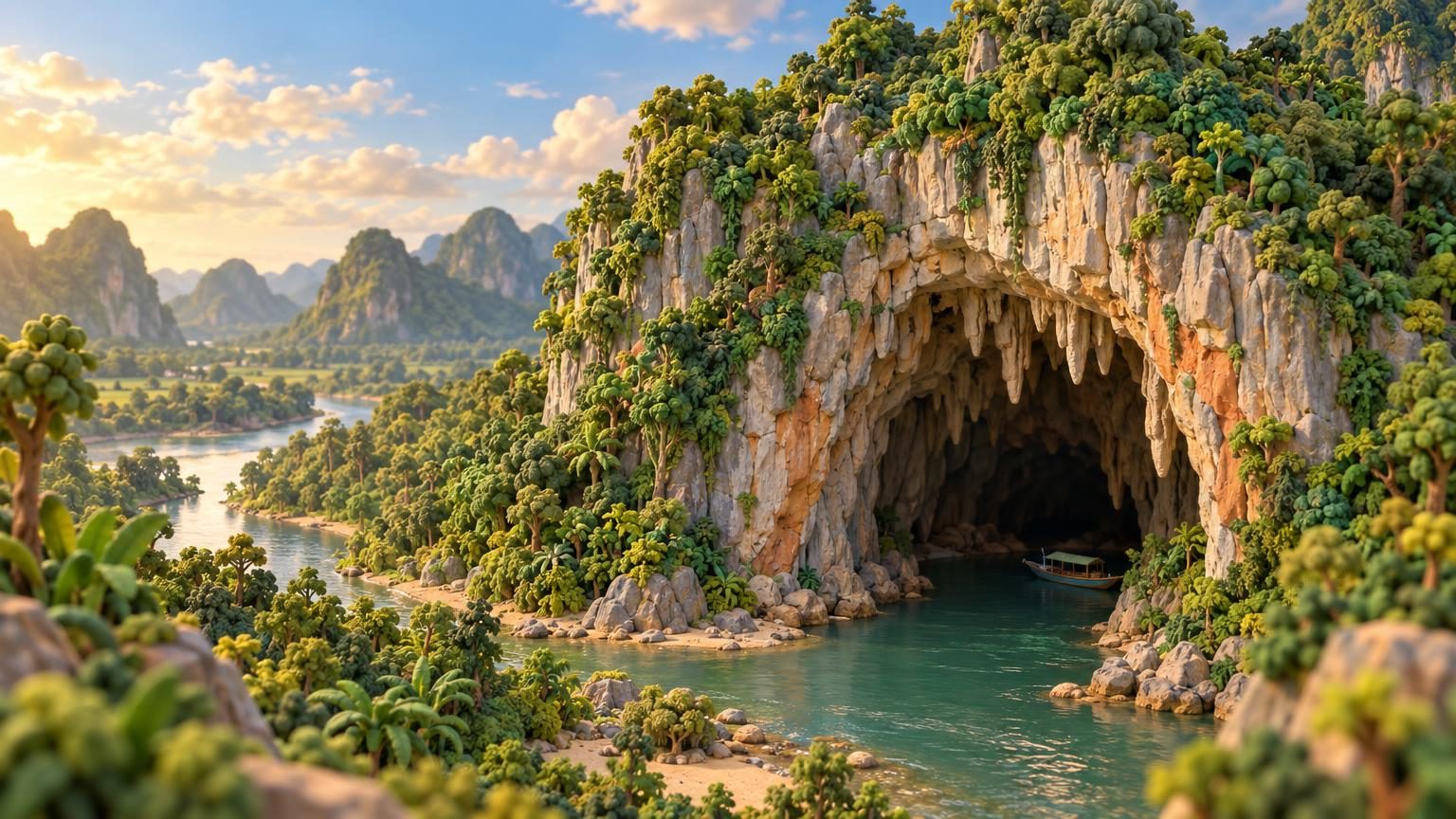
Mouth of a limestone cave in Quang Binh with a river running out, clay model

Phong Nha: 400 million years of limestone and 300 caves

Short answer

Phong Nha Ke Bang National Park in Quang Tri province was inscribed by UNESCO in 2003 and extended in 2015 and 2025. Its karst has been evolving since the Paleozoic, some 400 million years ago, and around 300 caves have been mapped, with about 126 km of passage surveyed as of 2009.

Last checked:

VietSIM sells prepaid Vietnam eSIMs. This guide mentions our store where it is relevant; the facts come from the sources listed at the end.

The facts

Figure
UNESCO Inscribed 2003, extended 2015 and 2025
Province Quang Tri, in Bo Trach and Minh Hoa districts
Core zone 857.54 km²
Karst age Evolving since the Paleozoic, some 400 million years
Caves known Around 300
Passage surveyed About 126 km as of 2009
Phong Nha Cave 7,729 m, 14 grottoes, a 13,969 m underground river
Paradise Cave 1.1 km path, opened 3 September 2010

Disclosure: VietSIM sells prepaid eSIMs for Vietnam. We sell no tours and have no relationship with any cave operator here.

The timescale is the attraction

The limestone here has been evolving since the Paleozoic, roughly 400 million years ago, and no major karst area in Asia goes back further. Everything else on this page is downstream of that number.

Four hundred million years of water moving through rock is what produced around 300 known caves, about 126 kilometres of which had been surveyed as of 2009. A single expedition that year added 20 caves totalling 56 kilometres. A system that can gain that much in one season is a system nobody has finished reading.

The park was inscribed by UNESCO in 2003 under natural criteria and extended in 2015 and again in 2025. The core zone covers 857.54 square kilometres in Bo Trach and Minh Hoa districts, about 500 kilometres south of Hanoi. Note the province: it is Quang Tri, and a great deal of older writing says Quang Binh, which matters when you are searching for transport.

What you can walk into

Two caves carry ordinary visitors on foot.

Phong Nha Cave runs 7,729 metres and contains 14 grottoes and an underground river of 13,969 metres. Visitors go about 1,500 metres in, which is a fraction of it and still more cave than most people have stood inside.

Paradise Cave has a built path 1.1 kilometres long, opened on 3 September 2010. The path is the reason it works for people who are not cavers.
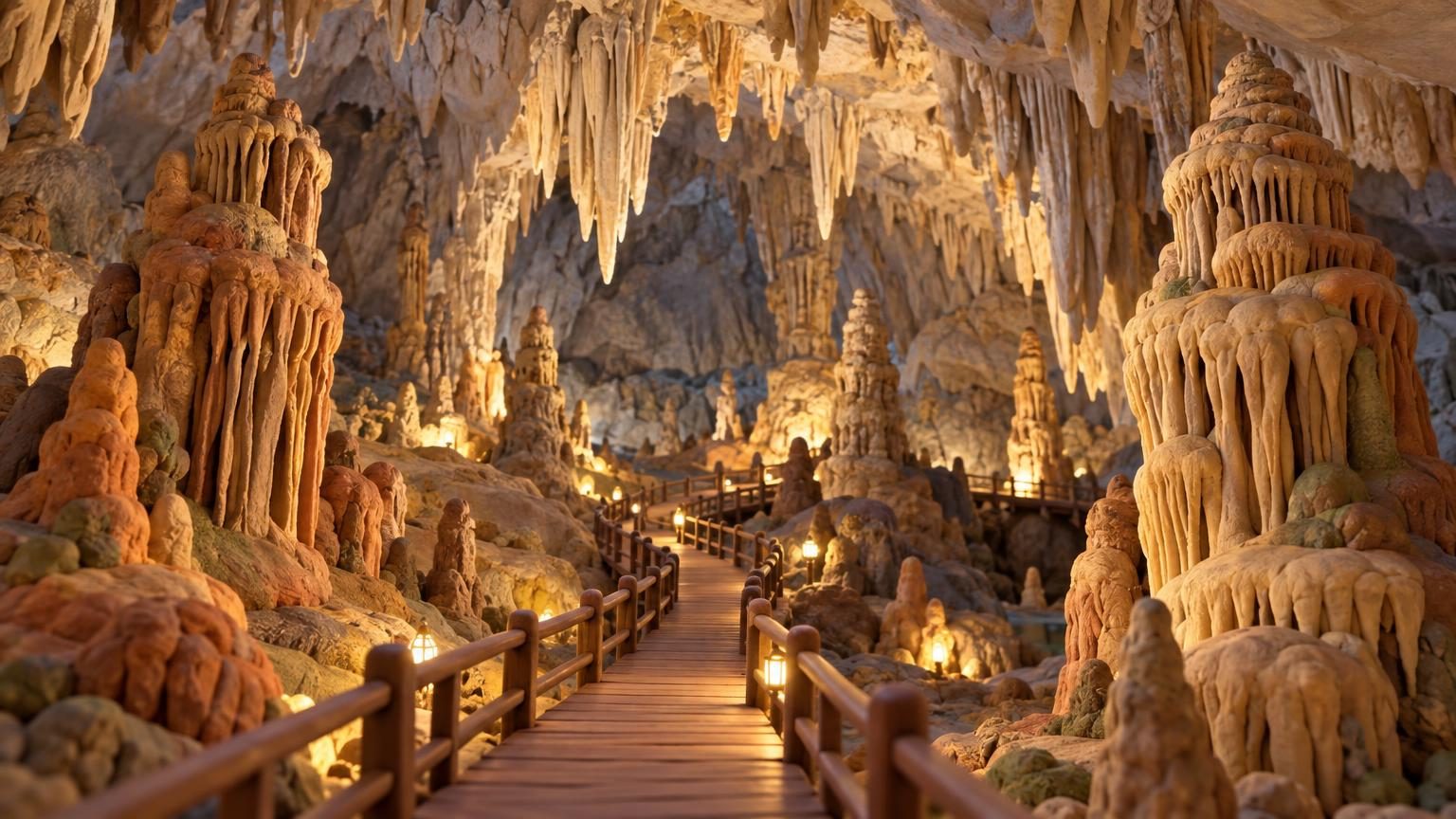
A wooden walkway with a handrail running through a vast lit cave chamber
The built path in Paradise Cave, 1.1 kilometres of it.

Son Doong is a different proposition. Its main passage runs over five kilometres, with sections 200 metres high and 150 metres wide. It is not something you add to an afternoon.

How far the cave goes, and how far you walk

  • Phong Nha Cave underground river13,969 m
  • Phong Nha Cave, full length7,729 mWith 14 grottoes along it.
  • Son Doong main passageover 5,000 mSections reach 200 m high and 150 m wide. Not a cave you walk into.
  • Phong Nha Cave, visitor routeabout 1,500 mAs far as ordinary visitors go in, which is a fraction of it.
  • Paradise Cave path1,100 mA built path, opened on 3 September 2010.
Metres. Around 300 caves are known here, with about 126 km of passage surveyed as of 2009. Source: Wikipedia, Phong Nha Ke Bang National Park.

Practical notes

This is the north central coast, so the wet season runs against the rest of the country’s: the month by month picture is in when to go to Vietnam. Caves flood, and access closes when they do, which is the single most important reason to check dates rather than assume.

Most people come through Hue or arrive by night bus or train on the main line, covered in sleeper buses in Vietnam and the Reunification Express. Coverage in the park is thin, so download what you need before you go in: sizing is in how much mobile data for Vietnam with the plans in the Vietnam eSIM store.

Questions

What is the park, exactly?

A UNESCO World Heritage site inscribed in 2003 under natural criteria and extended in 2015 and 2025, in Bo Trach and Minh Hoa districts of Quang Tri province, roughly 500 km south of Hanoi. The core zone covers 857.54 square kilometres.

How old is the limestone?

The karst has been evolving since the Paleozoic, some 400 million years ago. No major karst area in Asia is older. That is the thing worth carrying in your head as you walk through it, because the caves are a consequence of that timescale rather than a feature added to it.

How many caves are there?

Around 300 caves and grottoes are known, and about 126 kilometres of passage had been surveyed as of 2009. A single 2009 expedition added 20 new caves with a combined length of 56 kilometres, which tells you how much of the system was still unmapped that recently.

Which caves can I actually walk into?

Phong Nha Cave, where visitors go about 1,500 metres in, and Paradise Cave, which has a 1.1 kilometre path opened on 3 September 2010. Phong Nha Cave itself runs 7,729 metres with 14 grottoes and a 13,969 metre underground river.

What about Son Doong?

Its main passage runs over five kilometres with sections reaching 200 metres high and 150 metres wide. It is not a walk-in cave and access is not comparable to the two above, so treat it as a separate undertaking rather than a stop on a day trip.

Sources

  1. Wikipedia: Phong Nha-Kẻ Bàng National Park
  2. Vietnam Railways: official ticketing
  3. Vexere: coach operators and routes in Vietnam
  4. Wikipedia: Climate of Vietnam