The etiquette is in the grammar
| Term | |
|---|---|
| Slightly older man | Anh |
| Slightly older woman | Chi |
| Someone younger | Em |
| Elderly man, elderly woman | Ong, ba |
| A little younger than your parents | Co for a woman, chu for a man |
| Older siblings of your parents’ generation | Bac |
| Polite I | Toi |
| Neutral word for you | There isn’t one |
Disclosure: VietSIM sells prepaid eSIMs for Vietnam. Nothing here is a product and no etiquette course is being sold to you.
Start with the pronouns, not the gestures
Most etiquette guides open with shoes and chopsticks. Those matter, but they are surface. The real system is that Vietnamese has no neutral second person pronoun, so kinship terms do the work, and anyone can be addressed with them rather than just relatives.
That means you cannot speak a polite sentence without deciding where the other person sits relative to you. Anh is a non-elderly man slightly older than you, chi is the equivalent for a woman, em is someone younger. Ong and ba are for elderly men and women. Co and chu are for people a little younger than your parents’ generation, and bac for the older siblings of that generation.
For yourself, use toi. It originally meant servant, is used formally, and carries a connotation of equal status regardless of age, which is exactly what a visitor wants.
You will get these wrong, and that is fine. Trying is the signal. The phrases that go with them are in Vietnamese phrases.
The physical rules worth knowing
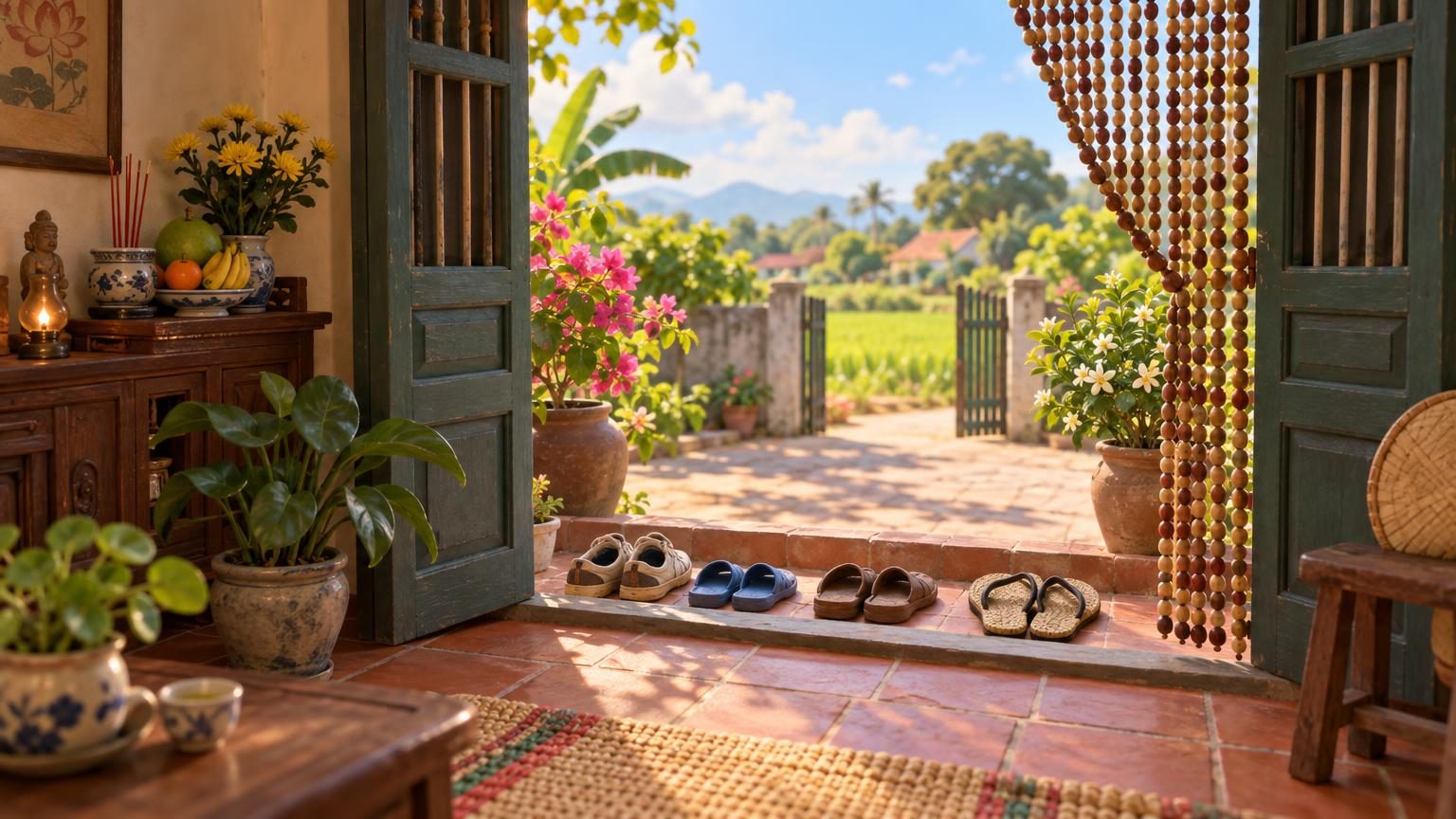
- Shoes off in a home. The shoes by the door are the instruction.
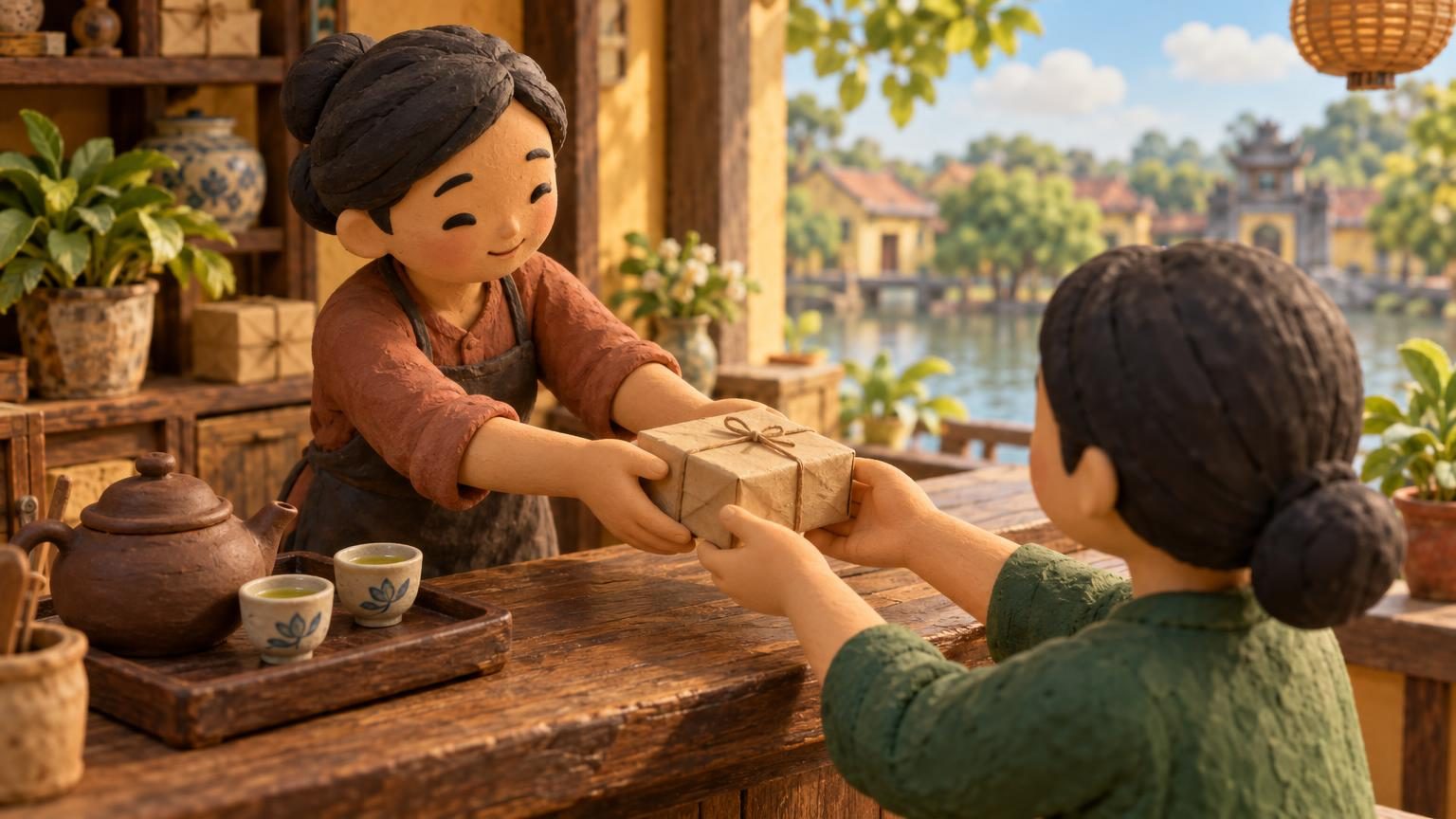
- Two hands for passing and receiving, especially with anyone older. A right hand supported at the elbow by the left is the same gesture.
- Cover shoulders and knees at temples and pagodas. A scarf in a bag solves it.
- Chopsticks flat, never upright in rice. Upright chopsticks resemble incense for the dead.
- Dạ softens anything. It is a polite yes and it is used far more freely than an English speaker expects.
At Tet
During the lunar new year, do not sweep or take out the rubbish. Sweeping during Tet is understood as sweeping good fortune out of the house, and cleaning is done in the weeks beforehand instead.
You are also likely to be invited into someone’s home during the holiday, and accepting is the correct answer. What the holiday does to the country is in Tet.
Where it shows up
Markets, where the difference between a negotiation and a fixed price is social as well as commercial, in shopping in Vietnam. Meals, where the plate of herbs and the order of things has its own logic, in Vietnamese street food and pho. And tipping, which is not the obligation visitors assume, in tipping in Vietnam.
For a translation app that works mid-conversation, sizing is in how much mobile data for Vietnam with the plans in the Vietnam eSIM store.