
ENLanguage
Vietnam travel guide for staying connected
SIM cards and eSIM, the three networks, Wi-Fi, the apps you need and city-by-city tips, checked against carrier and official sources.
Before you go

Vietnam SIM card: what to know before you buy one
Vietnamese SIM cards come from Viettel, VinaPhone and MobiFone, and every line must be registered to your passport under Decree 163/2024/ND-CP. Your phone must be unlocked. Vietnam scheduled its 2G switch-off for 15 September 2026, so a phone with 4G calling (VoLTE) avoids call problems. An eSIM gives the same network without swapping cards.
Read the guide
Which eSIM for Vietnam fits your trip
Match the plan to 3 things: how many days you stay, how much data you use in a day, and whether you need a Vietnamese phone number. A daily allowance suits steady use and a total allowance suits short bursts. Viettel covers the most ground outside the cities; all 3 networks are strong in the cities and along the coast.
Read the guide
How Much Data Do You Need for Vietnam? 7, 14 and 30-Day Examples
For a Vietnam trip, start with your own recent data usage. The example budgets below assume 0.3, 0.7 or 2 GB per day and add a 20% buffer, producing 2.52, 5.88 or 16.8 GB for seven days. They are planning scenarios, not measured traveller averages. Check both allowance and validity, then round up if you need to select a fixed plan size.
Read the guide
Roaming or a local eSIM for Vietnam?
Roaming means your home plan is used on a Vietnamese network and billed by your home operator at whatever your contract says. A local eSIM makes you a subscriber in Vietnam, paid once before you fly, and past about 3 days it usually costs less per day. Keep the home SIM for SMS with data roaming off.
Read the guide
Using two SIMs in Vietnam: keep your number, buy local data
A modern phone runs 2 lines at once: your home SIM for calls and SMS, and a travel eSIM for data. Apple notes an iPhone uses one cellular data network at a time, so set the eSIM as the data line and turn data roaming off on the home line. iPhone 13 and later hold two eSIMs.
Read the guide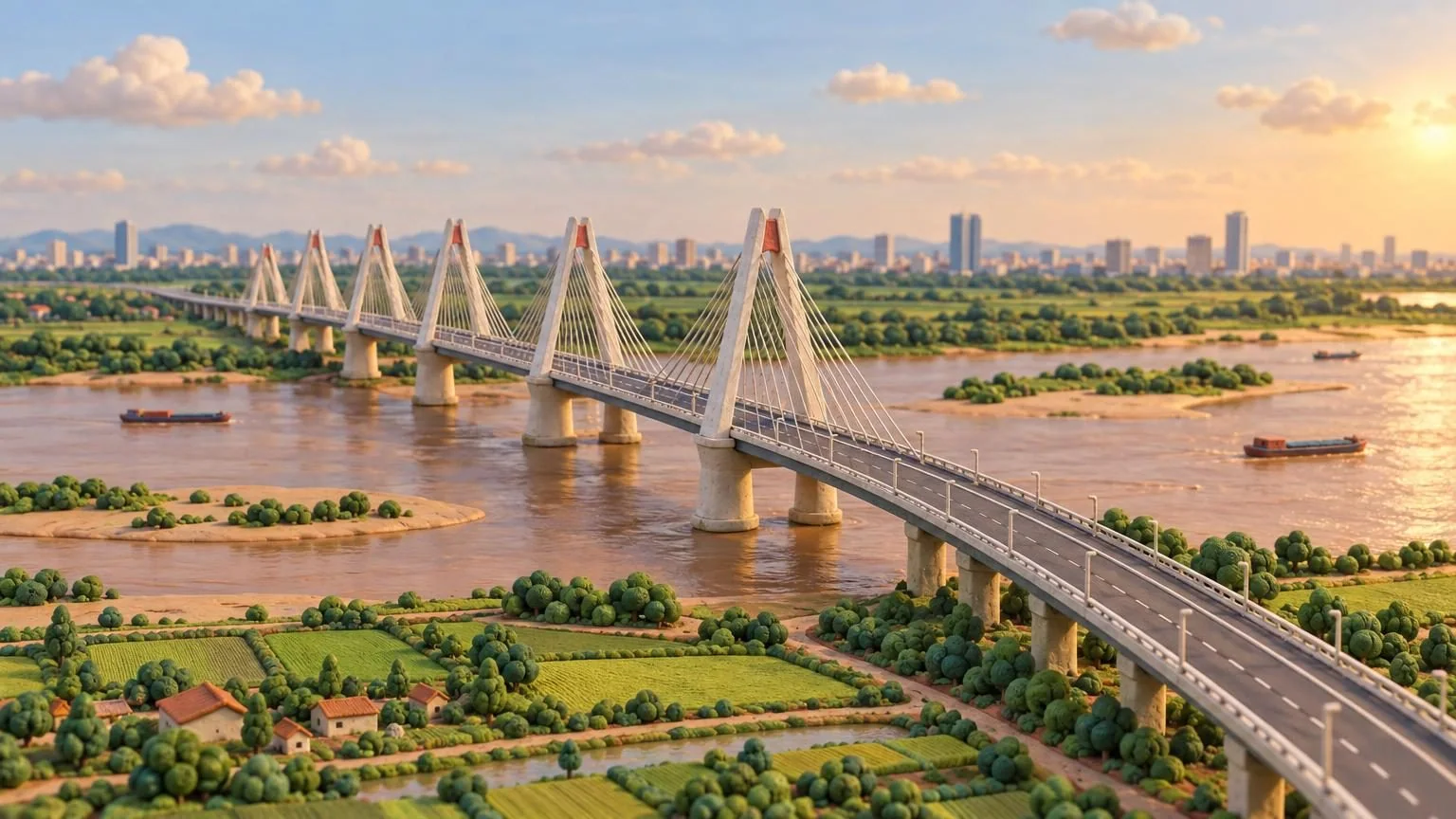
Hanoi airport to the Old Quarter: bus, app car or taxi
Noi Bai sits about 35 km northeast of central Hanoi, across the Nhat Tan bridge. Three ways in: the orange 86 bus, which runs from both terminals to the Old Quarter and Hanoi Railway Station; a car booked in an app, which shows the price before you book; or a taxi from a desk in arrivals.
Read the guide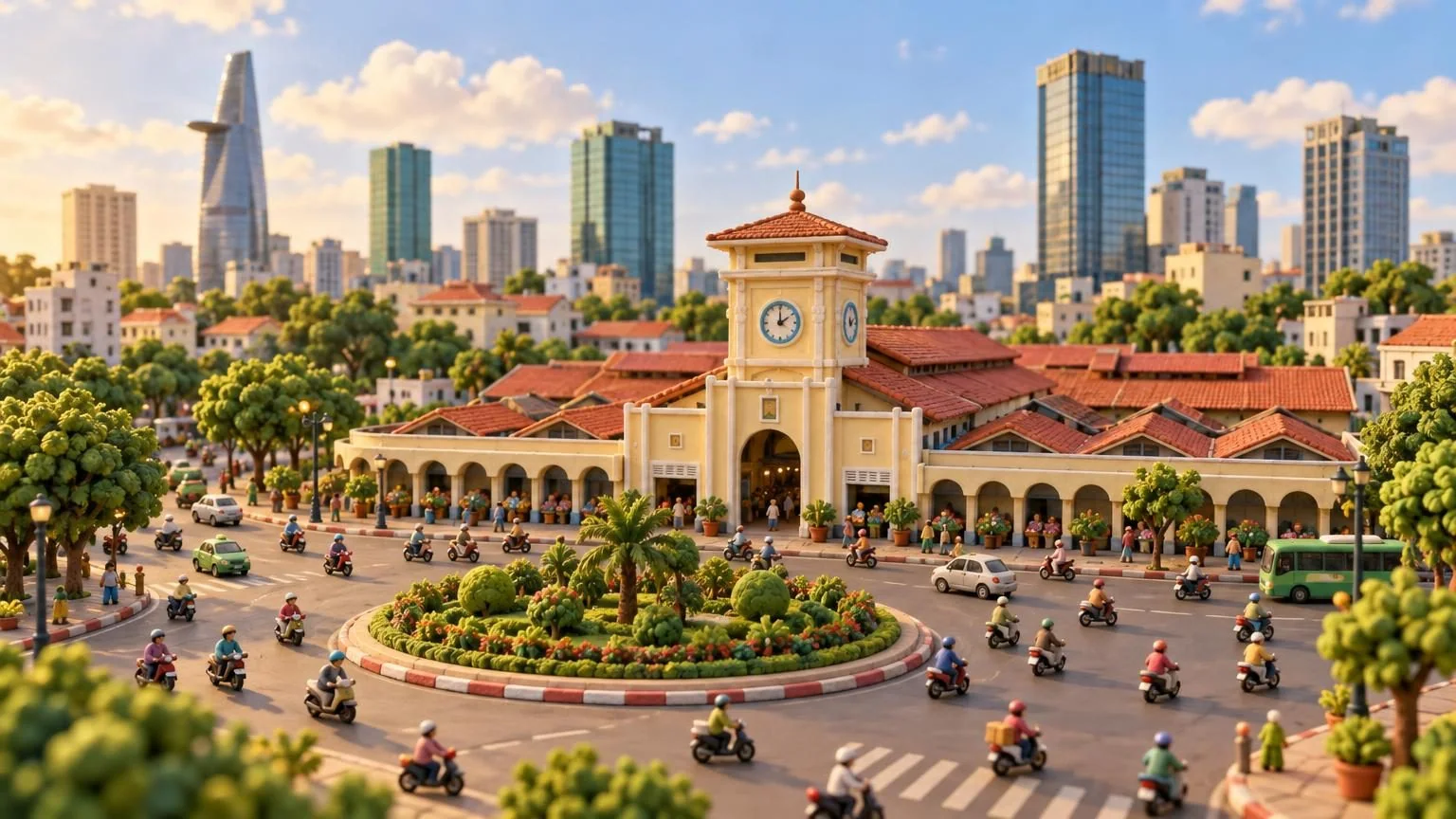
Tan Son Nhat to District 1: bus 109, an app car or a taxi
Tan Son Nhat is close in: the city's own bus route 109 covers 9.3 km between the airport and Saigon bus station in District 1, runs 05:30 to 22:15 and costs 15,000 dong. The other two ways are a car booked in an app and a taxi bought at a counter in arrivals.
Read the guide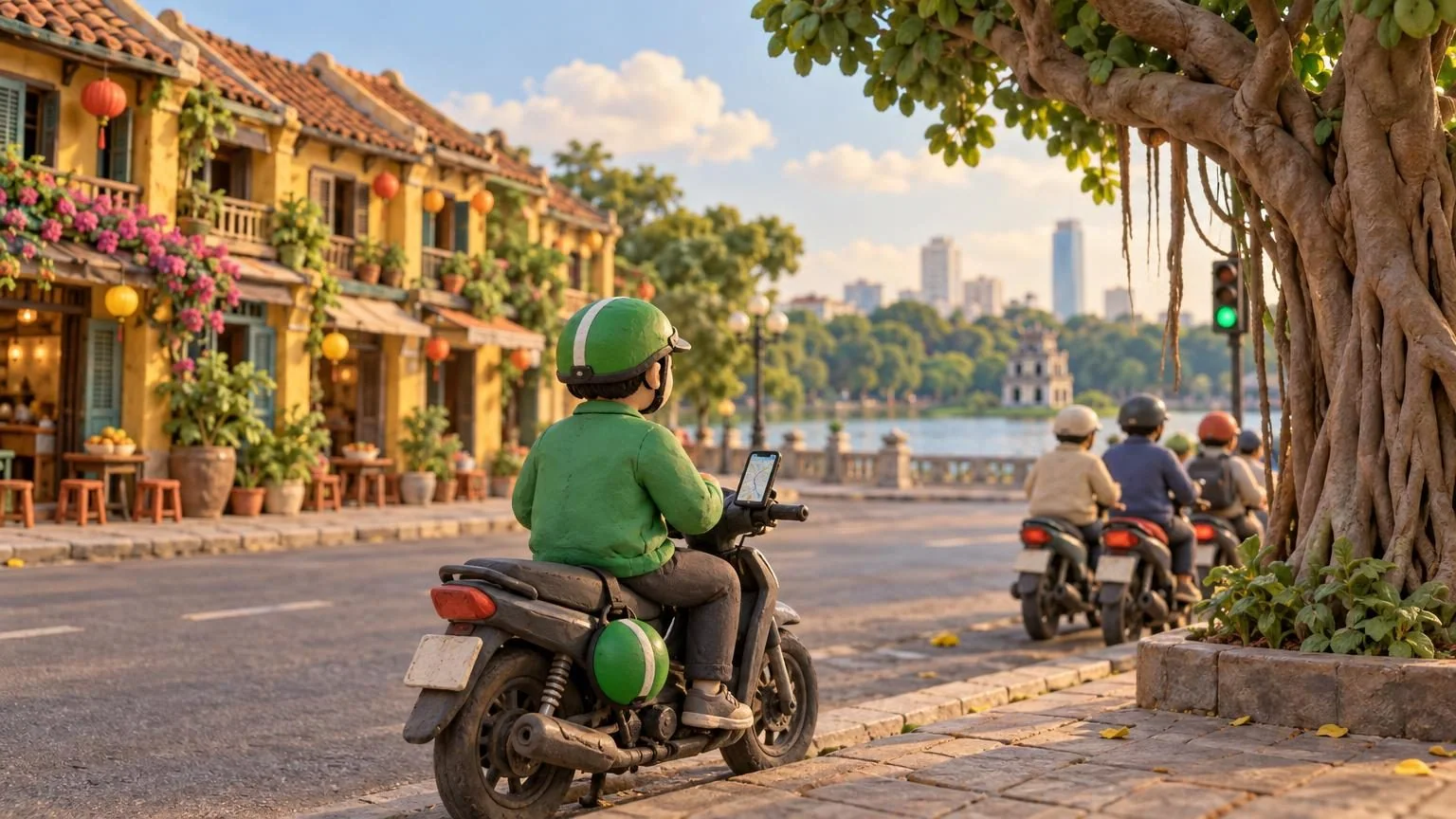
Grab in Vietnam: how the app works, what the price means
Grab is the ride-hailing app most phones in Vietnam have: a car or a motorbike, a price fixed and shown before you book. Its own terms say the price moves with demand, excludes tolls, and carries a surcharge between 22:00 and 05:59. Be and Green SM do the same job, and every booking needs mobile data.
Read the guide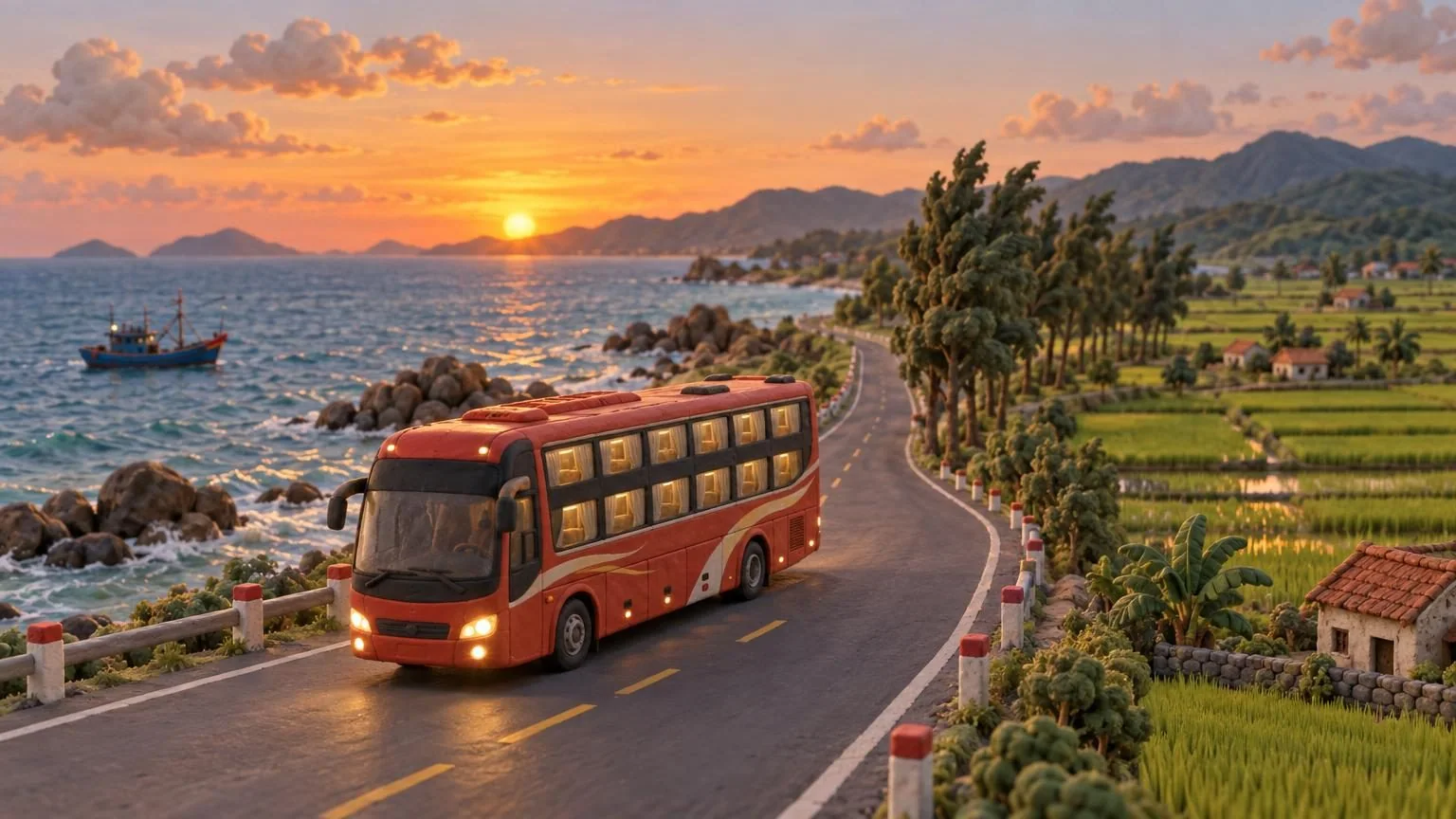
Sleeper buses in Vietnam: what a berth is like and how to book
A Vietnamese sleeper bus has flat berths in two tiers instead of seats, and it is how most long overnight journeys are made. Vexere, a national booking platform, lists more than 2,000 operators on over 5,000 routes, with the berth chosen online. Trains cover much of the same coast, bookable at the railway's own site.
Read the guide
The Reunification Express: riding Vietnam's north to south line
The North to South line runs 1,726 km between Hanoi and Saigon, and an end to end journey takes about 30 hours. The name Reunification Express is informal: no train officially carries it. Berths are booked on the railway's own site, and the stretch over the Hai Van pass is the reason to sit up.
Read the guide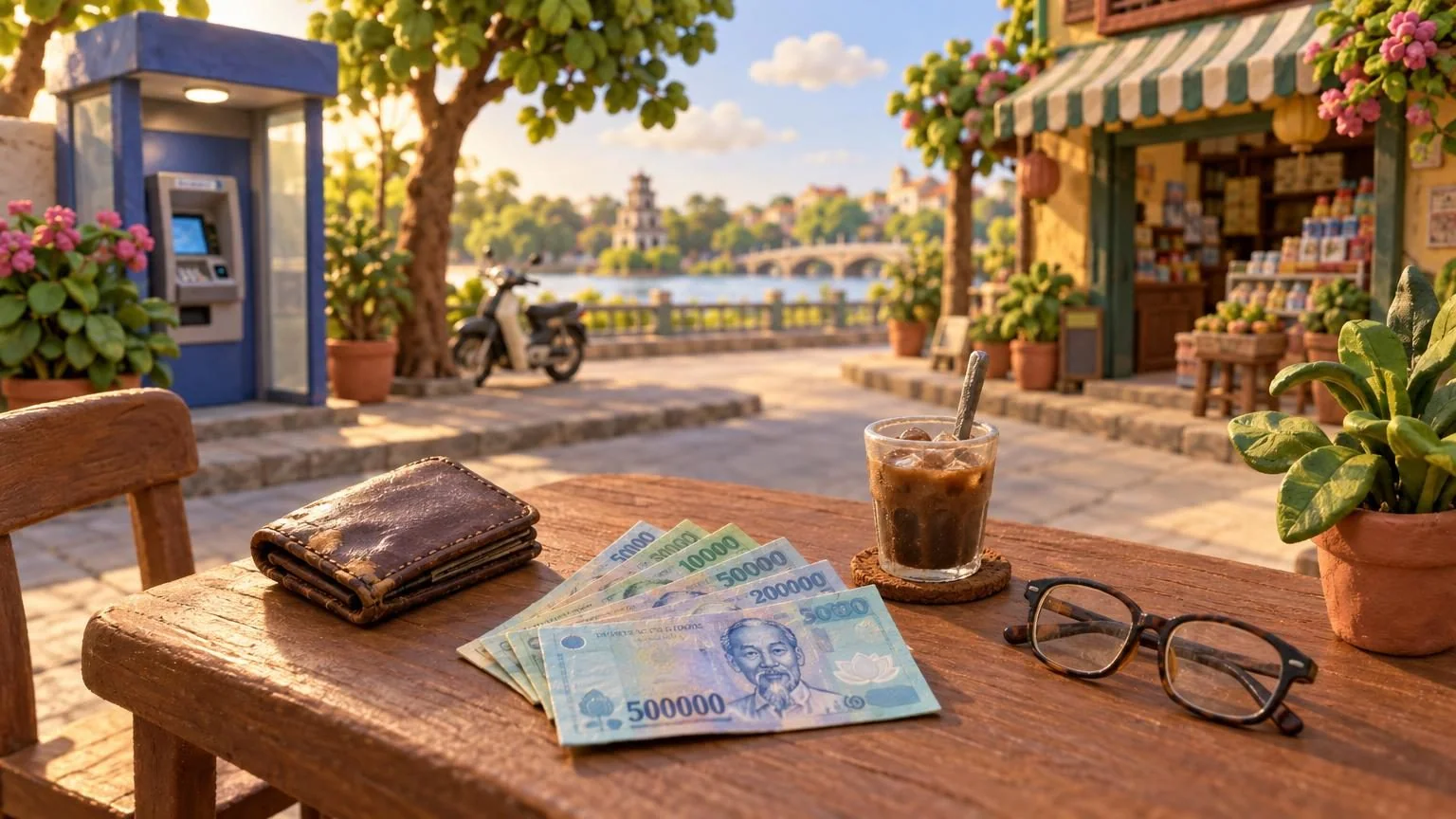
Vietnamese money: the notes, the zeros and the two blue ones
Vietnam uses the dong, ISO code VND, symbol ₫. Six polymer notes are in circulation, from 10,000 to 500,000, with 1,000, 2,000 and 5,000 still around on paper. No coins have been in use since 2022. The 20,000 is blue and the 500,000 is cyan, which is the mix-up that costs visitors money.
Read the guide
Tipping in Vietnam: what is expected, what is welcome
Tipping is not expected in Vietnam and is welcome almost everywhere. Restaurant bills already carry VAT, 10 percent as standard but 8 on many goods and services until 31 December 2026, and some hotels add a printed service charge. Tip in dong, in small notes, handed over rather than left.
Read the guide
Is Vietnam safe? What the travel advisories actually say
Vietnam sits at the lowest of Australia's 4 advisory levels, exercise normal safety precautions, and the UK names no area to avoid. The risks that are real are ordinary ones: bag snatching from motorbikes, road accidents, drink spiking in tourist bars, and scams around airport transfers.
Read the guide
When to go to Vietnam: three regions, three different years
Vietnam has 3 climates at once. Hanoi is cool and dry from December to February and wet from May to October. Ho Chi Minh City is dry December to April and rainy May to November. The central coast runs opposite: dry January to August, then typhoon and wet season September to December.
Read the guide
The Vietnam e-visa: the official site, the fee and the rules
Vietnam's e-visa is issued by the Immigration Department at evisa.gov.vn for a maximum of 90 days, single or multiple entry, at 25 USD or 50 USD. Apply from outside Vietnam, up to a year ahead, and enter through a border gate on the government's list, published at evisa.gov.vn: international airports, land crossings and seaports.
Read the guide
A Vietnam itinerary that survives the map: 7, 10 and 14 days
Vietnam is long: the railway runs 1,726 km end to end and takes about 30 hours. In 7 days pick 2 bases, not 5. Ten days adds a third. Fourteen lets you take the coast slowly, and the Hue to Da Nang train leg, under 3 hours, is the one worth planning around.
Read the guide
Sapa: a mountain town at 1,500 m, and how to get there
Sa Pa sits at 1,500 m in the Hoang Lien Son mountains of Lao Cai province, which is why it is cold when Hanoi is warm. Fansipan, 3,147.3 m and 9 km to the southwest, is reached by a cable car that climbs 1,410 m in about 20 minutes.
Read the guide
Ha Long Bay: 1,600 islands, and how not to see them badly
Ha Long Bay is a cluster of about 1,600 limestone islands in Quang Ninh province, inscribed by UNESCO in 1994 and extended in 2000 and 2023. The core zone covers 334 km² and 775 islets. The karst towers took 20 million years to form, on limestone laid down over 500 million.
Read the guide
Plugs and power in Vietnam: 220 V, type C and F, and your charger
Vietnam runs on 220 V at 50 Hz with type C and type F sockets, the two round-pin European shapes. Most phone and laptop chargers accept 100 to 240 V, so an adapter is enough and a converter is not. Power banks must travel in hand baggage, and IATA's limit is 100 Wh.
Read the guide
Vietnamese street food: what to eat, and the water question
Vietnamese street food is cooked in front of you, which is the point and also the safeguard. Health guidance is plain: take care with food and water hygiene, and hepatitis A and typhoid both travel in contaminated food and water. Check vaccines at least 8 weeks before you fly; the emergency number is 115.
Read the guide
Hoi An: a trading port that survived, and how to see it
Hoi An Old Town was inscribed by UNESCO on 12 December 1999. It sits on the Thu Bon river about 28 km south of Da Nang, and it was a trading port from the 15th to the 19th century. The Japanese Covered Bridge is a 10 metre wooden bridge from the start of the 17th century.
Read the guide
Ninh Binh: karst towers, rowed boats and a 1,000 year old capital
Ninh Binh's Trang An complex was inscribed by UNESCO on 23 June 2014 as a mixed cultural and natural site, under criteria v, vii and viii. It covers 6,226 hectares about 7 km west of Ninh Binh city, and links Hoa Lu, Tam Coc and Trang An. The boats go through caves.
Read the guide
Da Lat: a French hill station at 1,500 m that grows everything
Da Lat sits at 1,500 m on the Langbiang Plateau in Lam Dong province, with a subtropical highland climate averaging 14 to 23 degrees. The French built it as a hill station, the first hotel in 1907, and the town was formally established in 1916. It grows coffee, tea, artichokes and flowers.
Read the guideVietnamese coffee: robusta, condensed milk and the phin
Vietnam is the second largest coffee producer after Brazil, and robusta is 97 per cent of the crop. French missionaries brought coffee in 1857 and the first plantations followed in 1888. The strong, dark cup with condensed milk is a robusta drink, brewed in a small metal phin filter.
Read the guide
The Mekong Delta: 40,500 km² of water, rice and boats
The Mekong Delta covers over 40,500 km² and holds about 19 million people. It grew 54.8 per cent of Vietnam's rice in 2011, and its mean elevation is only 0.82 m above sea level. Life runs on the water: floating markets, boats instead of lanes, and Can Tho as the main city.
Read the guide