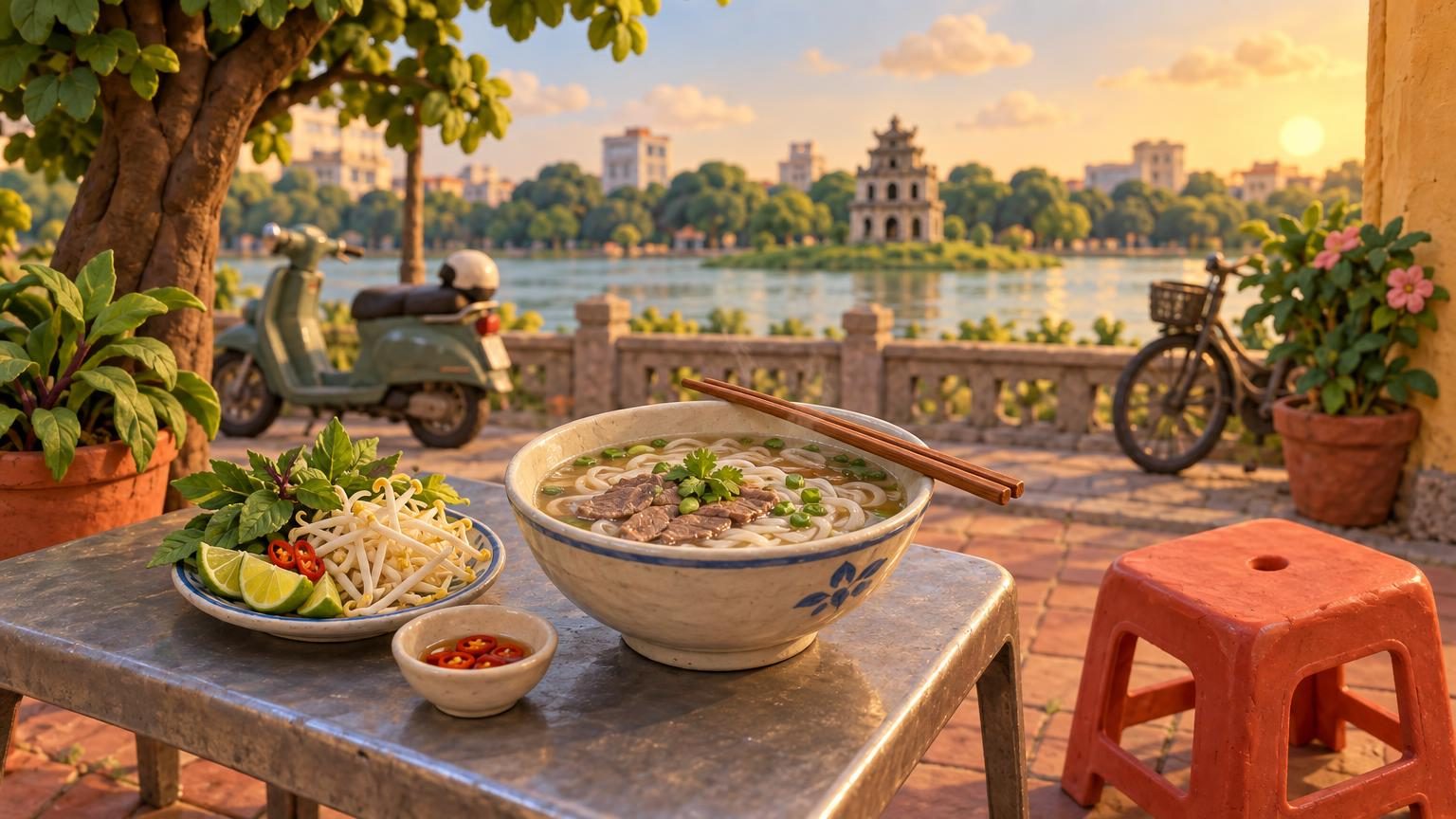
The facts
| Figure | |
|---|---|
| Emerged | Northern Vietnam, between 1900 and 1907 |
| Traditional home | Van Cu and Dao Cu villages, Nam Dinh province |
| Spread south | After the 1954 partition |
| Northern broth | Savoury, clear, subtly spiced |
| Southern broth | Sweeter, cloudier |
| Main varieties | Pho bo (beef) and pho ga (chicken) |
| Chicken version | Appeared in 1939 |
| Noodles | Flat rice noodles, banh pho, typically medium wide |
Disclosure: VietSIM sells prepaid eSIMs for Vietnam. We sell no food, run no tours and recommend no specific shop on this page.
A young dish, which is why it moves
Pho emerged in northern Vietnam between 1900 and 1907. The villages of Van Cu and Dao Cu in Nam Dinh province are named as its traditional home. That is a documented century, not folklore, and it explains something you will notice on the ground: this is a living recipe that is still moving, not a fixed heritage item.
The second date that shapes every bowl is 1954. After the partition, over a million people left the north for the south. Pho, relatively little eaten in the south until then, became popular there quickly, and it changed as it settled.
A hundred years of pho
1900 to 1907
Pho emerges in northern Vietnam
Van Cu and Dao Cu villages in Nam Dinh province are named as its traditional home.
1939
Pho ga appears
The chicken version, possibly because beef was not sold at the markets on Mondays and Fridays.
1954
The partition carries it south
Over a million people left the north, and the bowl changed as it settled.
Two bowls, not one
Northern pho is the older form. The broth is savoury and clear, the spicing subtle, and the garnish minimal: blanched spring onion, diced spring onion and coriander. Pickled garlic and fried dough often come alongside. You are meant to taste the broth, and the plate of herbs that a foreign pho restaurant would hand you is mostly absent.
Southern pho is sweeter and cloudier, and arrives with a supporting cast: bean sprouts, Thai basil, lime, hoisin. The bowl is a starting point you finish yourself.
Neither is a corruption of the other. The version most of the world met first is the southern one, carried abroad by later emigration, which is why a northern bowl can surprise a visitor who thinks they already know the dish.
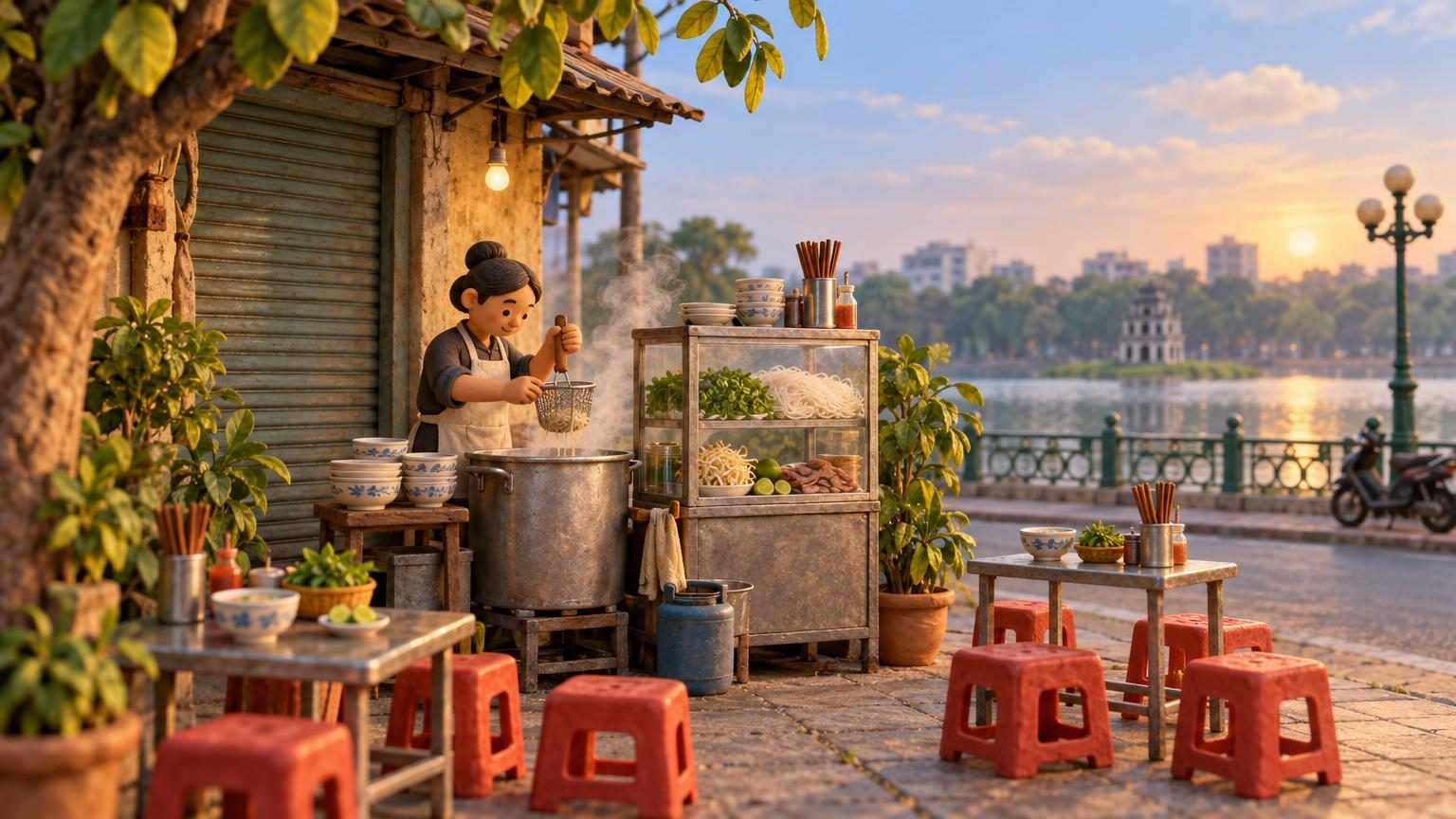
Ordering it
- Pho bo is beef, pho ga is chicken. Chicken pho appeared in 1939, possibly because beef was not sold at the markets on Mondays and Fridays.
- Check the noodles. Flat rice noodles, banh pho, usually medium wide. Round noodles mean a different dish.
- Taste the broth before adding anything, especially in the north, where adding sauce to a clear broth is missing the point of that bowl.
- Breakfast is the normal time. A pho shop that is busy at 7 am and closed by noon is running exactly as it should.
- Không cay if you do not want chilli, which is worth knowing in either direction. More phrases are in Vietnamese phrases.
Around the bowl
What else is on the street beside it is in Vietnamese street food, and the drink that follows it is in Vietnamese coffee. Reading the price on the wall is in Vietnam’s money and whether to leave anything on the table is in tipping in Vietnam.
Looking up a shop’s opening hours at 6 am is exactly the kind of thing you need a working connection for: sizing is in how much mobile data for Vietnam with the plans in the Vietnam eSIM store.