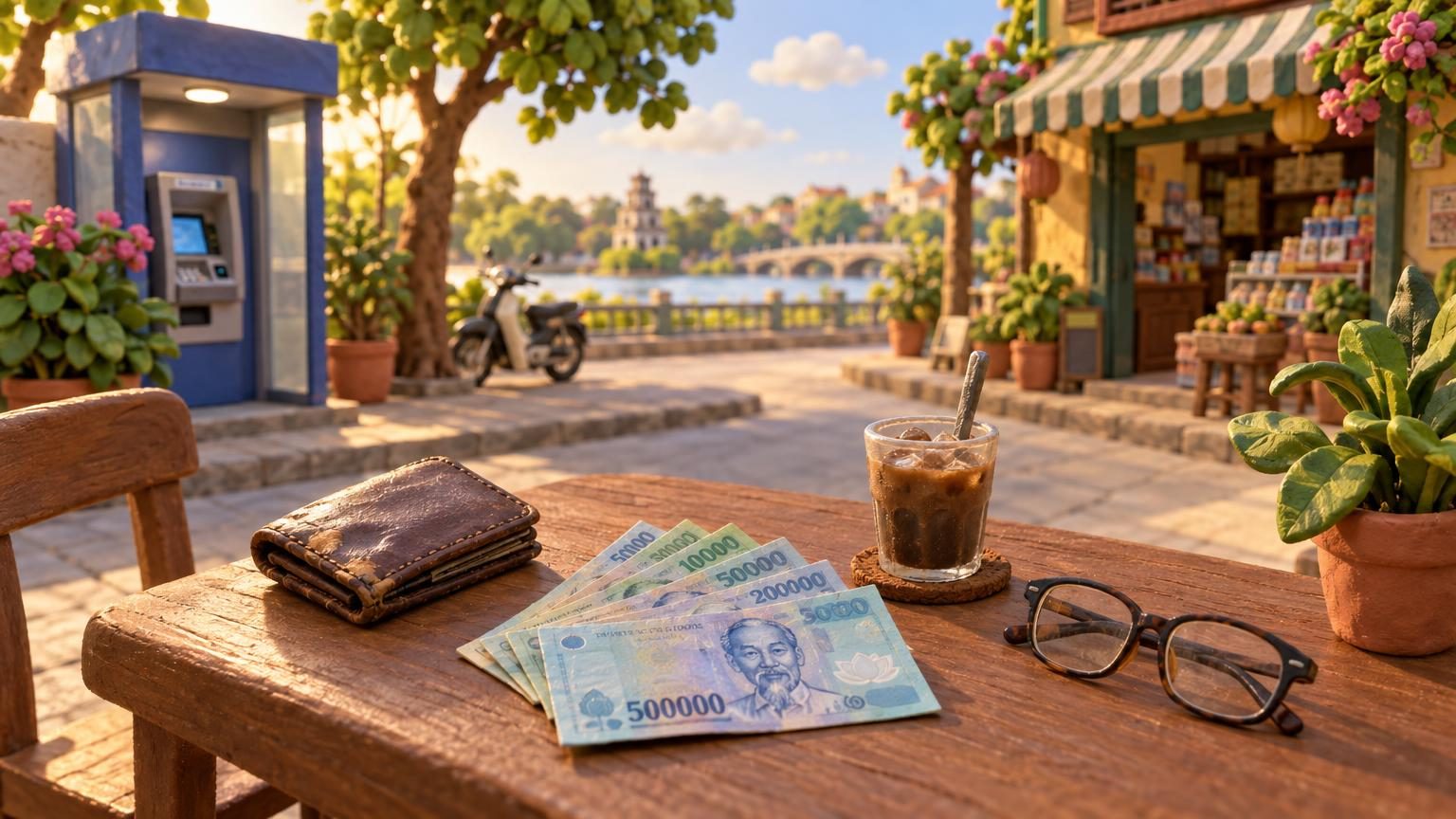
The notes
| Note | Material | Colour |
|---|---|---|
| 500,000 ₫ | Polymer | Cyan |
| 200,000 ₫ | Polymer | Red |
| 100,000 ₫ | Polymer | Green |
| 50,000 ₫ | Polymer | Pink |
| 20,000 ₫ | Polymer | Blue |
| 10,000 ₫ | Polymer | Yellow |
| 5,000, 2,000, 1,000 ₫ | Cotton paper | Still circulating, no longer printed |
Disclosure: VietSIM sells prepaid eSIMs for Vietnam and prices its plans in US dollars. This page is about the money in your hand, which is a different thing.
The two blue ones
The 20,000 is blue and the 500,000 is cyan. They are the same material, close enough in size, and in a dark restaurant or the back of a taxi they are easy to swap. The gap between them is twenty five times the value.
There is one fix and it is boring: count the zeros before the note leaves your hand. Four zeros is twenty thousand. Five zeros is five hundred thousand. Colour is a hint, the zeros are the fact.
Reading a price
Three conventions, all in daily use:
- 25 on a menu means 25,000 dong. The thousands are understood.
- 25k means the same thing, written the way a phone would.
- 25.000 is the full figure, with a dot where an English speaker expects a comma.
Type any of them into the reader below and it will tell you what you are actually paying, and which notes make it up.
Cash, card and the gap between them
Cards work where the business is large: hotels, supermarkets, chain cafes, the railway’s own ticket site, and booking platforms like Baolau, which takes Visa, MasterCard, American Express, JCB and UnionPay along with Google Pay, Apple Pay and Alipay.
Cash is what the rest of the country runs on. The bus into Ho Chi Minh City from the airport is 15,000 dong, paid on board. A bowl of pho, a coffee on a plastic stool, a market mango, a motorbike parking attendant: notes, every time.
Ride apps sit in the middle, since Grab lets you pay by card in the app or in cash to the driver, and the app tells you which before you confirm. The way those fares are built is in Grab in Vietnam.
What to carry
- A day’s cash, not a week’s. ATMs are everywhere a hotel is.
- Small notes for buses and street food. Breaking a 500,000 at a noodle stall is a nuisance for everyone.
- A card for the big items, which keeps the cash pile small enough to lose without pain.
Arriving with a working phone makes the rest easier, because the ride, the map and the address all live there. What that needs is worked out in how much mobile data for Vietnam, and the plans are in the Vietnam eSIM store.