The figures
| Figure | |
|---|---|
| Access to improved water, 2015 | 98 per cent of the population |
| Urban | 99 per cent |
| Rural | 97 per cent |
| Safe to drink untreated | No |
| 2009 testing | Widespread contamination of municipal tap water, including high E. coli |
| Tap in the home, 2010 | 23 per cent, 59 urban and 8 rural |
| Common practice | Boiling, or bottled water |
| Water losses | Around 30 per cent on average in 2009, up to 75 in some cities |
Disclosure: VietSIM sells prepaid eSIMs for Vietnam. We sell no filters, no bottles and no water treatment of any kind.
Improved is not the same as drinkable
This is the distinction that makes the coverage statistics confusing. In 2015, 98 per cent of the population had access to improved water sources, 99 per cent in urban areas and 97 per cent rural. That is a high number and it is real.
It does not mean the tap is drinkable. Improved describes the source and its protection, not the water arriving at your glass. Testing in early 2009 found widespread contamination of municipal tap water, including high levels of E. coli, and the practical result is that households boil water or buy bottled.
An improved source against a tap in the home
Losses in the network make the point concrete. Non-revenue water averaged around 30 per cent in 2009, down from 39 per cent in 2000, and reached 75 per cent in some cities. Water that leaks out of a pipe at that rate is a pipe that other things can leak into.
What this means on a trip
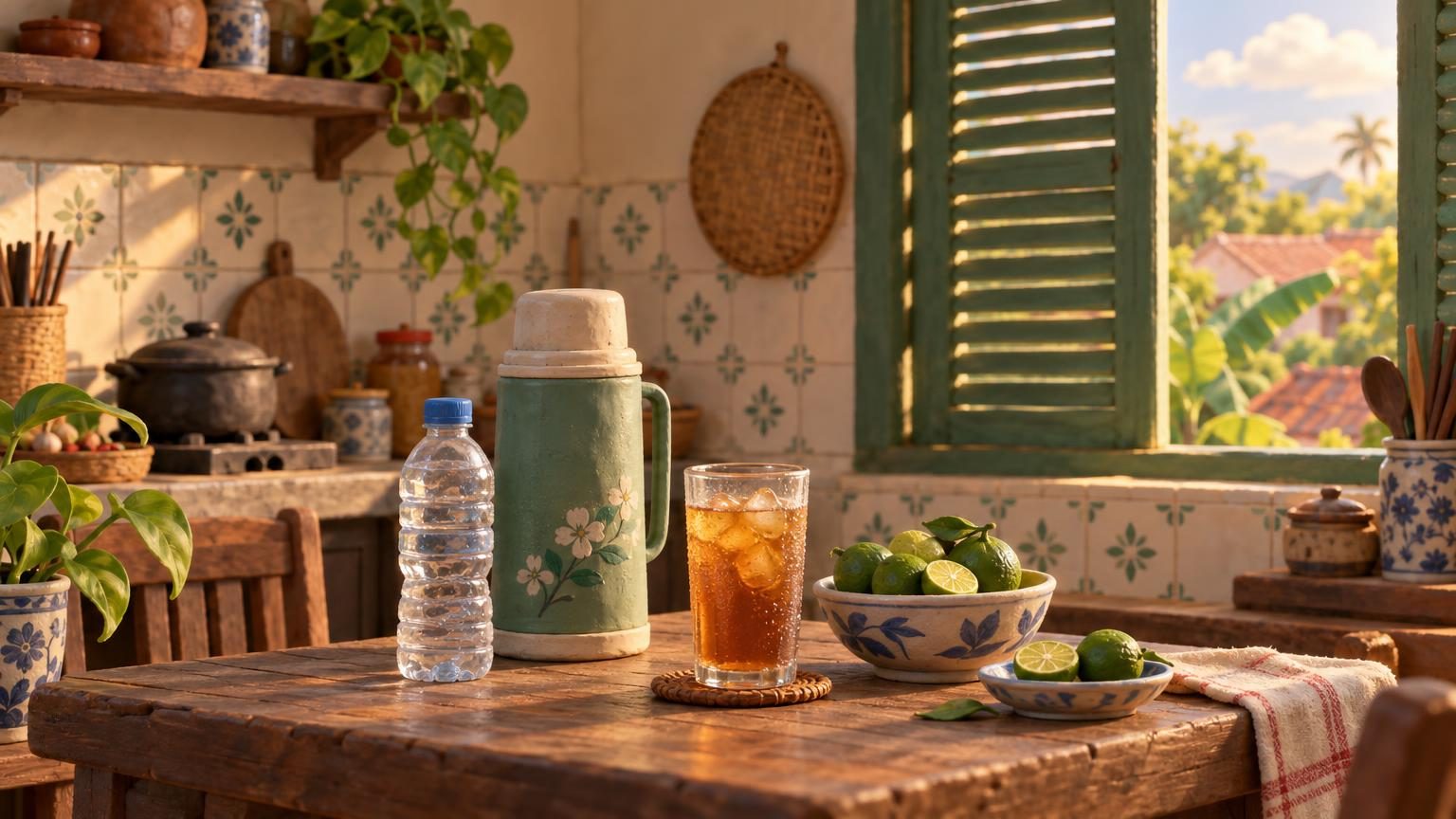
- Drink bottled or boiled. That is what the country does, so it is neither precious nor unusual.
- Ice is generally fine. The uniform machine-made cylinders come from treated water and are used everywhere.
- Teeth are a personal call. The exposure is small; if you are being careful anyway, use bottled.
- Hot tea is free in most places and is boiled by definition, which is why it is on every table.
The waste problem, stated honestly
A visitor drinking bottled water for two weeks generates a visible pile of plastic, and that is a real cost of the advice above. Refill stations exist in tourist towns and many hotels will fill a bottle from a treated dispenser, which is worth asking about at check-in.
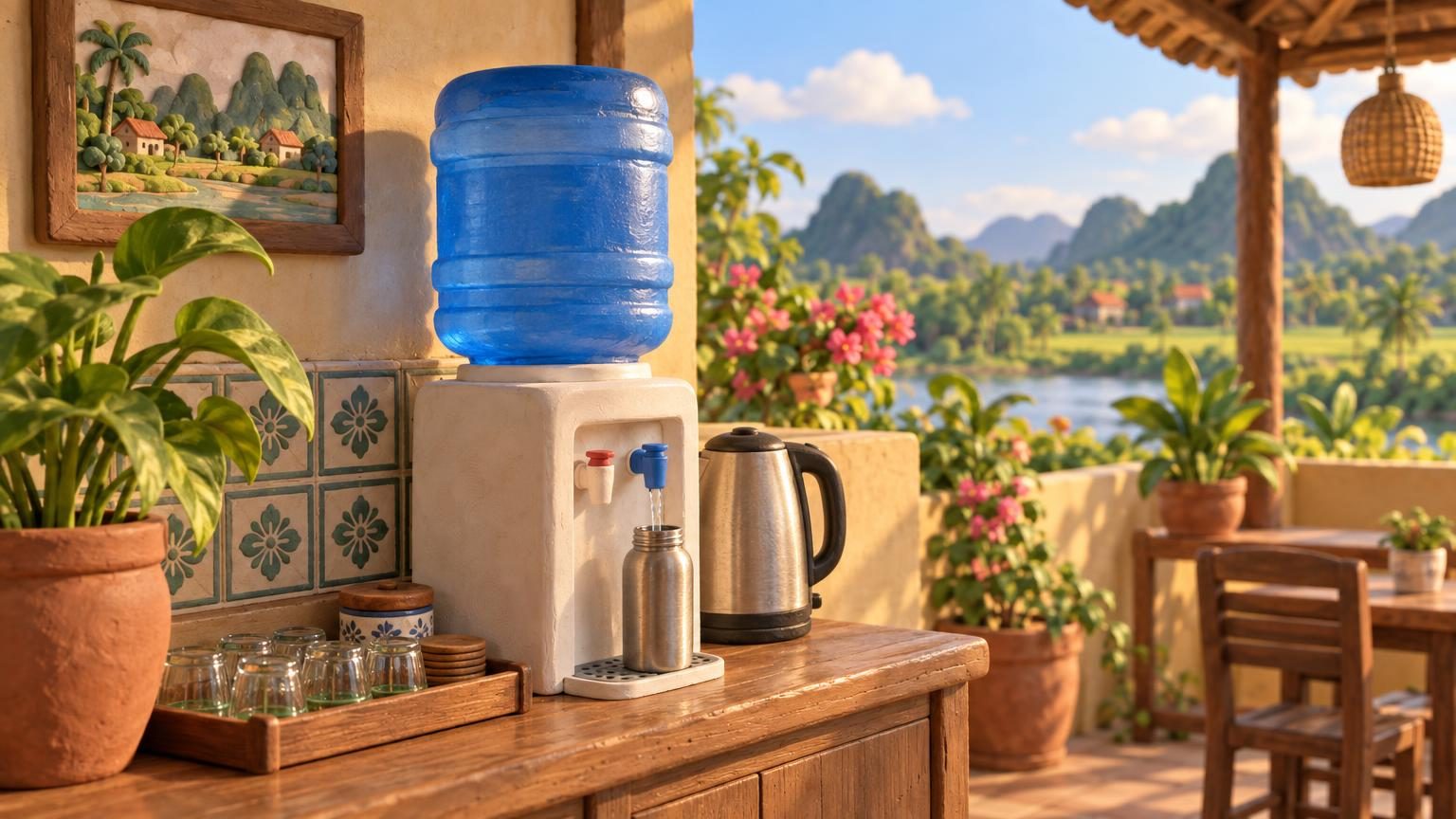
This page is not going to pretend there is a clean answer. The water is not drinkable from the tap, and the alternative has a cost. Reducing the number of bottles is the available improvement.
Related
The rest of the health picture, including what your insurance has to cover, is in travel insurance for Vietnam, and the wider safety picture is in is Vietnam safe. Eating well on the street, which is the other question people ask in the same breath, is in Vietnamese street food.
If you need to find a refill point or a pharmacy while you are out, sizing is in how much mobile data for Vietnam with the plans in the Vietnam eSIM store.