What the advisories say
| UK FCDO | Australia Smartraveller | |
|---|---|---|
| Overall level | No area advised against | Exercise normal safety precautions |
| Named risks | Bag snatching, motorbike crashes, drink spiking, scams | Petty theft, bag slashing, road safety |
| Restricted places | Near military bases, some border areas | Same |
| Licence to ride | Warns against riding without experience | Vietnamese licence required from 50cc |
Disclosure: VietSIM sells prepaid eSIMs for Vietnam, and one honest answer below is “keep a working phone”. Everything else here comes from two governments, not from us.
The short answer
Both advisories describe an ordinary country rather than a dangerous one. Australia rates Vietnam at the calmest of its four levels and the UK names no province to stay out of. That is the same standing given to much of Western Europe.
The specific risks they list are worth taking seriously precisely because they are specific. None of them is “Vietnam is dangerous”. All of them are things that happen to distracted travellers in busy cities.
Bags and phones
The FCDO writes that bag snatching by thieves on motorcycles is common, and Smartraveller adds bag slashing in crowded places, especially during holidays.
- Carry the bag on the side away from the traffic.
- Hold the phone with a grip, not fingertips, and step away from the kerb to use it.
- Leave the passport in the room and carry a photograph of it.
- Be ready to let go. Nothing in the bag is worth being pulled into the road for.
The road
This is the part travellers underrate. The FCDO records that motorbike accidents are common and have killed and injured British nationals, and that bus crashes are not uncommon, especially at night. Smartraveller states that riding anything of 50cc or more requires a valid Vietnamese licence.
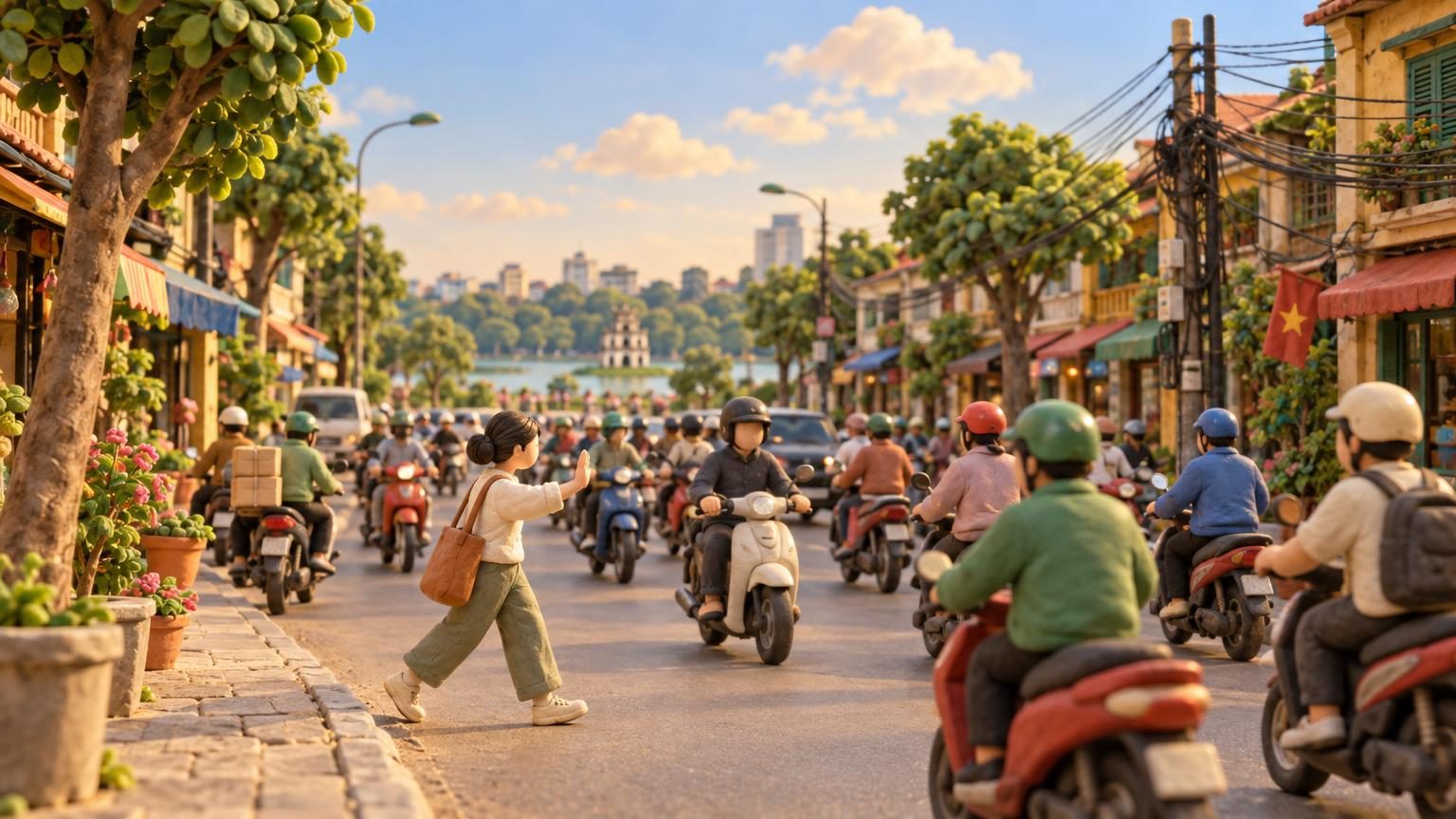
If you have never ridden a motorbike, Hanoi is not where to learn. A car booked in an app costs little, and the fares are set before you book, as Grab in Vietnam explains.
Bars, drinks and taxis
Two warnings in the UK advice deserve plain repetition. British nationals have reported rape and sexual assault in the main tourist areas, with unlicensed taxi drivers involved in a number of cases. And there have been deaths caused by drinks containing methanol, including in licensed bars and shops in tourist areas.
The practical response is the one that works anywhere: buy your own drinks and watch them poured, decline things offered by strangers, and get home in a ride booked in an app or a taxi from a hotel desk rather than one that finds you.
Arrivals and transfers
The FCDO flags airport transfer scams, including offers of free bus transfers to hotels. The published alternatives are dull and safe: the city’s own airport bus, which in Ho Chi Minh City is a posted 15,000 dong fare, a car booked in an app, or a counter inside the arrivals hall. Those are covered in Hanoi airport to the Old Quarter and Tan Son Nhat to District 1.
A working connection is what makes all of this easy rather than tense: you can book the car, read the messages, check the address and call a hotel. What that takes is in how much mobile data for Vietnam and the plans are in the Vietnam eSIM store.
Advisories change. Both are linked at the top of this page, and they are the version that matters on the day you travel.