What the guidance actually says
| Published position | |
|---|---|
| General hygiene | Take care with personal, food and water hygiene |
| Hepatitis A | Spread by contaminated food and water, vaccine recommended for the unvaccinated |
| Typhoid | Spread by contaminated food and water, vaccine recommended for most travellers |
| Dengue and chikungunya | Mosquito-borne risk in the country |
| Timing | Check vaccine recommendations at least 8 weeks before travel |
| Emergency number | 115 |
Disclosure: VietSIM sells prepaid eSIMs for Vietnam. Nothing here is medical advice, and a travel clinic is the place to get that.
Why the street is not the risk
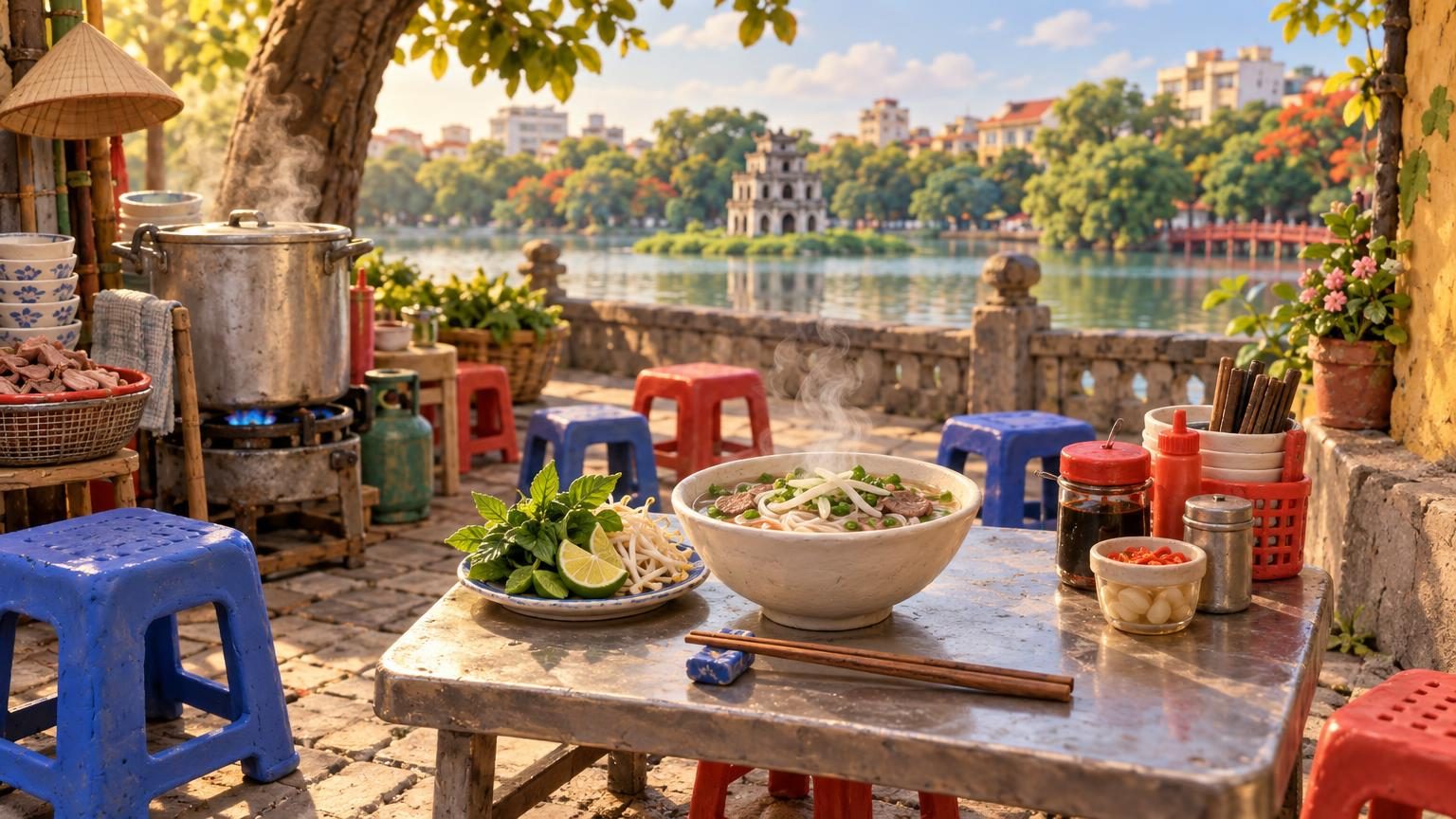
The fear of street food is mostly a fear of kitchens you cannot see, which is exactly backwards. A pavement stall cooks in front of you, sells one or two dishes, and turns its ingredients over in a morning. You can watch the pot, the heat and the hands.
What the health guidance talks about is not venue but hygiene, and it names the things that matter: hepatitis A and typhoid both travel in contaminated food and water. Those are questions of water, washing and storage, and they apply to a hotel buffet as much as to a plastic stool.
The sensible habits
- Eat where people are eating. Turnover is the single most useful signal.
- Hot food hot. Anything that arrives steaming has just been cooked.
- Sealed bottles or a filter for water, and remember that households here boil or filter rather than drinking straight from the tap.
- Raw herbs are a choice. They come with almost everything. Eat them or do not, but decide rather than discover.
- Wash or sanitise hands before eating with your fingers, which you will.
What to order
- Pho, a breakfast food here rather than a dinner one.
- Banh mi, the sandwich that came out of a colonial bread tradition and improved it.
- Bun cha in Hanoi, grilled pork in a bowl of dressing.
- Com tam in the south, broken rice with pork chop.
- Ca phe sua da, coffee with condensed milk, which is a dessert pretending to be a drink.
The two warnings worth repeating
The FCDO records deaths caused by drinks containing methanol, including in licensed bars and shops in tourist areas. That is a spirits problem, not a street food one, and the answer is to buy from somewhere reputable and to be wary of unusually cheap cocktails.
Dengue and chikungunya are present, which makes repellent an evening habit rather than a jungle one. The full safety picture is in is Vietnam safe.
Paying for it
Street food is a cash economy: small notes, no cards, and prices often written as a bare number meaning thousands. The whole system is in Vietnamese money, and tipping is covered in tipping in Vietnam.
Finding the good stalls is a phone job, since the reviews, the map and the translation all live there. The sizing is in how much mobile data for Vietnam and the plans are in the Vietnam eSIM store.