
What you are booking
| Sleeper bus | Seated coach | Train berth | |
|---|---|---|---|
| You travel | Lying flat | Upright | Lying flat |
| Overnight | Built for it | Uncomfortable | Built for it |
| Reaches | Towns off the rail line | Everywhere | Stations only |
| Book at | Vexere, operator apps | The same | The railway site |
| Luggage | Hold under the floor | Hold or overhead | With you or at the end |
Disclosure: VietSIM sells prepaid eSIMs for Vietnam. We do not sell bus tickets and have no stake in which operator you choose.
The vehicle
A Vietnamese sleeper coach replaces seats with berths: two tiers of padded beds along three aisles, a curtain on the newer ones, a blanket, and a moulded foot well at the end of each bed that holds a small bag. Shoes come off in a plastic bag at the door, which surprises first-timers and makes complete sense by the second trip.
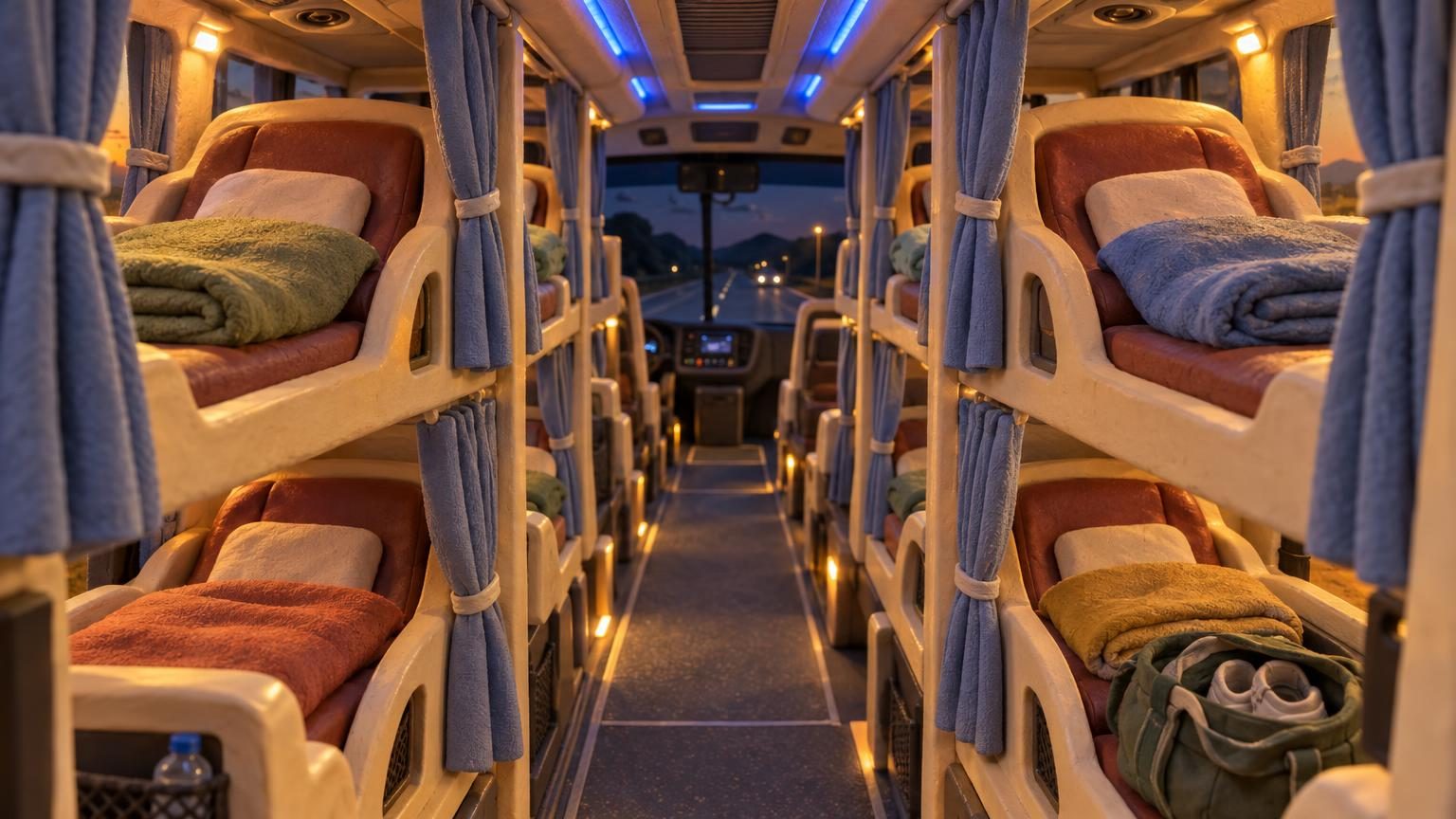
They are built for distance: Hanoi up to Sapa, down to Hue and Da Nang, Ho Chi Minh City out to Da Lat, Mui Ne or the Mekong. Leaving in the evening and arriving after dawn is the point of the whole format, and it takes a hotel night out of the budget.
Booking
Vexere is the platform most Vietnamese phones use for this. It lists more than 2,000 operators across over 5,000 routes and lets you pick the actual berth from a plan of the coach, which is worth doing rather than being assigned one.
Baolau is the easier starting point for a visitor, because it searches trains, buses, ferries and flights side by side for the same journey, and takes Visa, MasterCard, American Express, JCB and UnionPay, along with Google Pay, Apple Pay and Alipay.
Choosing a berth
- Lower deck for easy access, a rest-stop dash, or a weak stomach.
- Upper deck for quiet and distance from the aisle.
- Away from the back where the ride is rougher over poor surfaces.
- Not directly beside the door on an overnight, which opens at every stop.
When the train is the better answer
Vietnam Railways sells its own tickets online, with schedules and fares on the same site. The train is steadier than a coach, it has a corridor, and its berths suit anyone who does not sleep well while cornering.
It only serves the line, though. For Sapa, Da Lat, Mui Ne or Phong Nha the bus goes where the rails do not, and that settles most itineraries without needing a comparison.
The connection part
Sleeper buses drop you where the operator’s depot is, which on an early morning may be several kilometres from your room. That is the moment a working data connection stops being a convenience: you book a car, show the driver the address, and go.
Work out what you need in how much mobile data for Vietnam, read how the ride apps price a trip in Grab in Vietnam, and pick a plan in the Vietnam eSIM store.