The numbers
| Figure | |
|---|---|
| Sa Pa town elevation | 1,500 m |
| Fansipan summit | 3,147.3 m |
| Distance, Sapa to Fansipan | 9 km southwest |
| Cable car length | 6.3 km |
| Cable car climb | 1,410 m, about 20 minutes |
| Range | Hoang Lien Son, Lao Cai province |
Disclosure: VietSIM sells prepaid eSIMs for Vietnam. Coverage in mountains is patchy wherever you buy it, and this page says so.
Why the altitude is the whole story
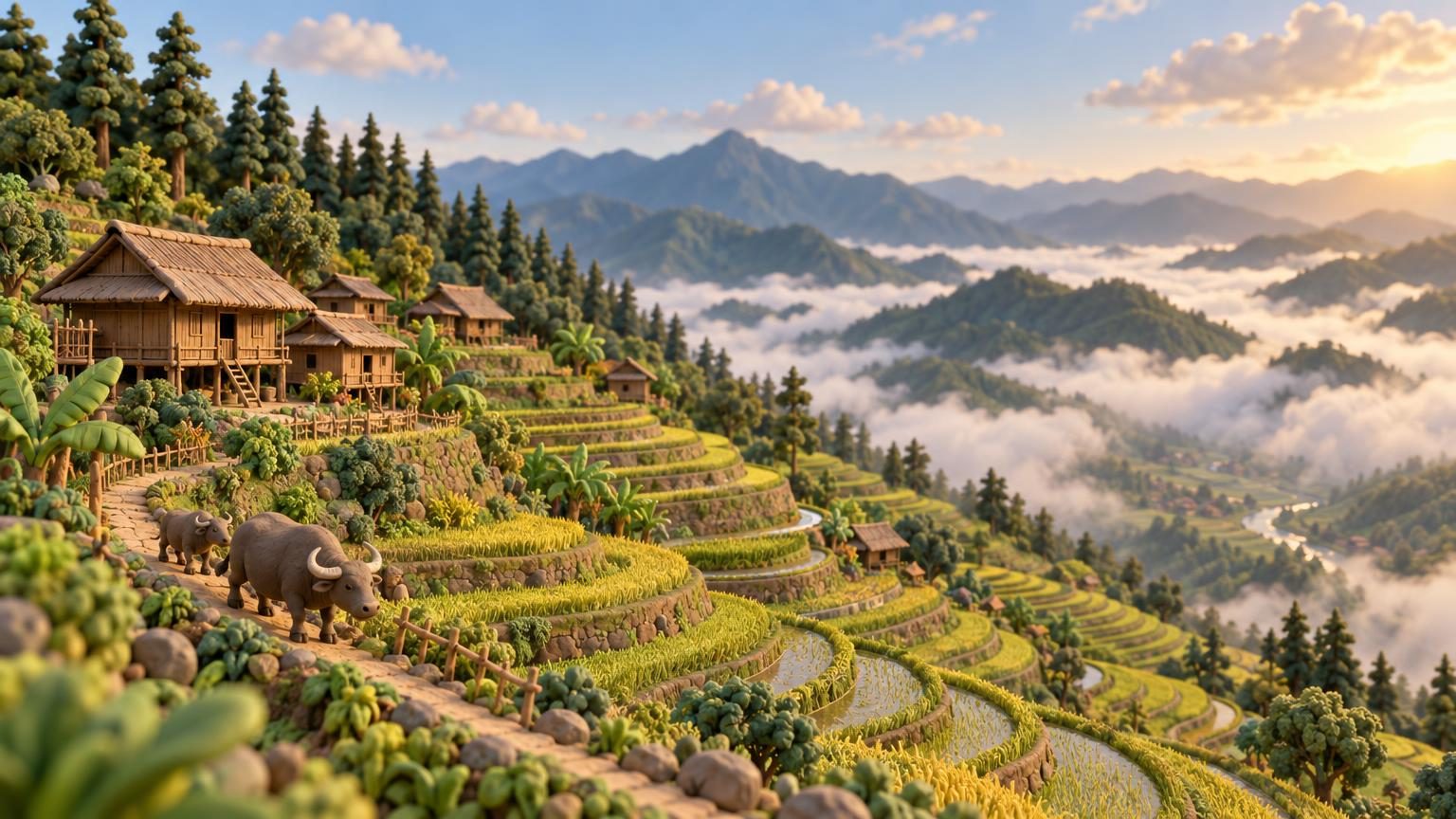
Sa Pa is at 1,500 m. Everything travellers find surprising about it follows from that one number: the cold, the cloud that fills the valley by mid-morning, the terraces cut into slopes too steep for flat fields, and the fact that you can leave a humid Hanoi and arrive somewhere that needs a coat.
It sits in the Hoang Lien Son range in Lao Cai province, close to the Chinese border, and the mountains behind it are the highest in the country.
Fansipan
The summit is 3,147.3 m, nine kilometres southwest of the town. It was first measured at 3,143 m in 1909, which tells you how long people have been putting a number on it.
The cable car spans 6.3 km and climbs 1,410 m, holding two Guinness World Records for a nonstop three-rope system, and it takes about twenty minutes. Walking up instead is a two or three day undertaking with a guide, and the two experiences share nothing but a summit.
Getting there
- Overnight train to Lao Cai, then a road transfer for the last stretch up to the town. Tickets come from the railway’s own site, and private sleeper carriages are attached to the service.
- Sleeper or seated bus from Hanoi, which runs the whole way on the expressway and is usually the faster door to door option. Operators and seats are on platforms like Vexere.
- Both are covered in more detail in sleeper buses in Vietnam and the Reunification Express.
What to expect from the weather
The north is cool and dry from December to February and wet from May to October, and Sapa amplifies both. Winter brings clear cold days and genuinely cold nights. Summer brings the rice terraces at their greenest, along with the rain that makes them that way.
Cloud is not a season here. It arrives, sits in the valley, and lifts without warning, which is why photographs of the same viewpoint look like different places. The month by month picture for the rest of the country is in when to go to Vietnam.
Practical
Bring layers, proper shoes for wet stone, and cash in small notes for the markets. Book the transport before you go rather than at the station, and remember that the last part of the journey is a mountain road in any weather.
A working connection matters more here than in a city, because it is what turns a missed bus into a rebooked one. Sizing is in how much mobile data for Vietnam and the plans are in the Vietnam eSIM store.