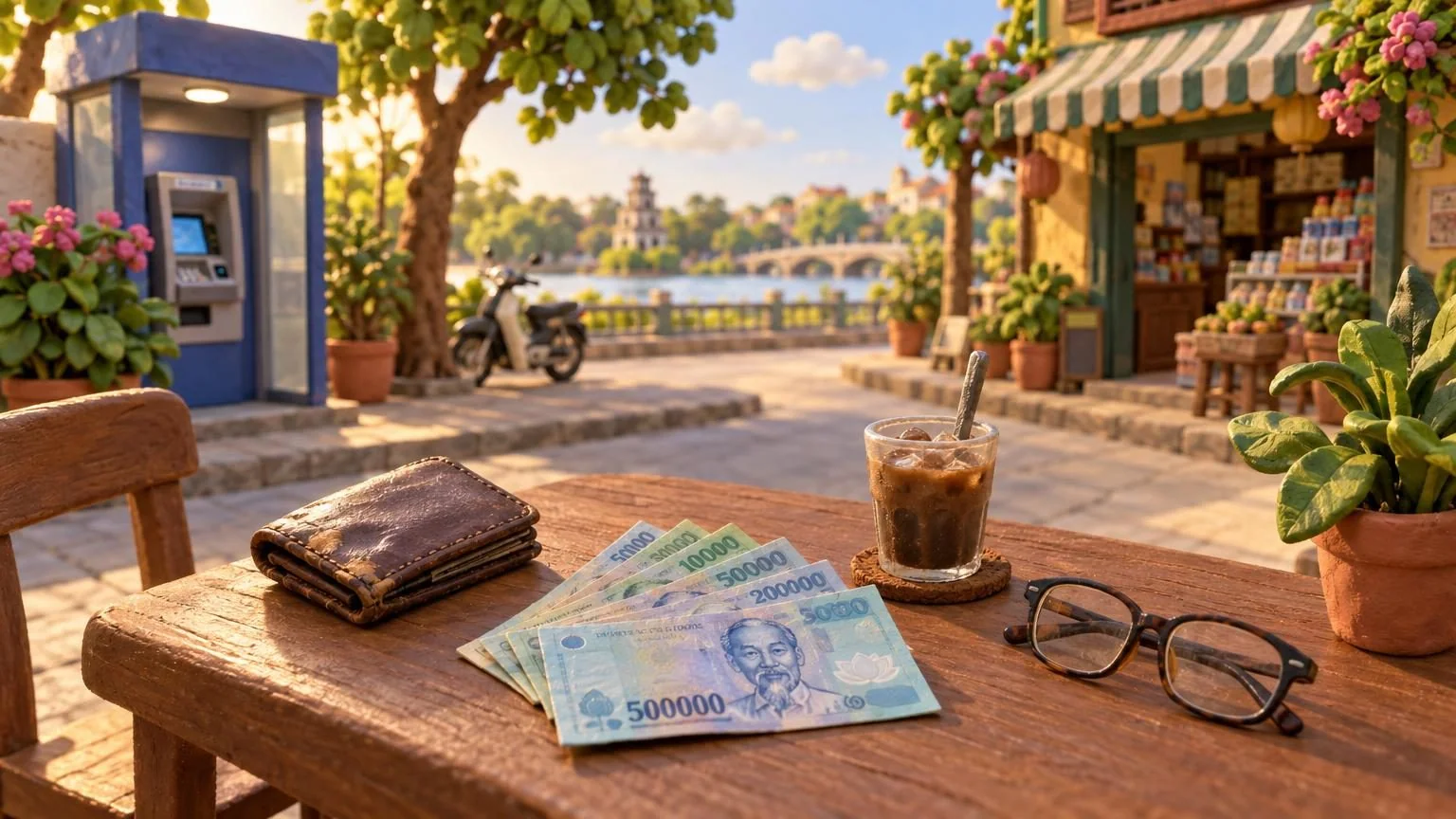
The numbers on one page
| 24 September 2026 | |
|---|---|
| 1 rupee | About 271 dong |
| 10,000 dong | About ₹37 |
| 100,000 dong | About ₹369 |
| 500,000 dong, the largest note | About ₹1,845 |
| Mental shortcut | Drop three zeros, multiply by 3.7 |
| Rupee notes in Vietnam | Hard to change; carry US dollars or a card |
| UPI in Vietnam | Announced, not live nationally as of July 2026 |
These are reference rates, the midpoint banks trade at. At a counter you will get a little less for your money, and the rate on the day you travel will differ. The shortcut survives small changes, which is why it is more useful than an exact figure.
Reading a Vietnamese price
The dong has large numbers and small value, and Vietnamese price writing takes that for granted. A menu that says 25 means 25,000 dong. A tag that says 25k or 25.000 means the same thing, since Vietnam writes thousands with a full stop where India uses a comma.
So the working steps are: read the number as thousands of dong, then multiply that number by 3.7 for rupees. 25 on a menu is 25 × 3.7, about ₹93. The reader at the bottom of this page does the first step for you if a price looks strange.
Why rupee notes stay at home
Vietnamese banks deal in US dollars, euros and the currencies of their larger trading partners. Vietcombank’s published rate table lists the rupee only for transfers, with no rate for buying notes, and a bank that will not buy a currency is a good sign that the smaller counters will not either.
There is a rule on the Indian side too. The Reserve Bank of India allows a resident to take at most ₹25,000 in Indian notes out of the country, and to bring the same amount back.
What to carry instead
- US dollars in cash. Vietnamese banks and exchange counters buy them readily. RBI rules allow up to USD 3,000 in foreign cash per trip.
- A forex card. Anything above that USD 3,000 cash limit goes on a prepaid forex card or a similar instrument. It also gives you a fixed rate for money loaded before you fly.
- An international debit or credit card. Hotels, larger restaurants and the Grab app take cards. Street food, markets and small shops mostly want cash.
Tell your bank before you travel so the first payment in Vietnam is not blocked as unusual.
UPI: coming, not here yet
It is a common question. The honest answer as of September 2026: India and Vietnam announced in May 2026 that UPI would be linked with Vietnam’s payment network, but no launch date was given, and the Finance Ministry’s list of live UPI links in July 2026 did not include Vietnam. The one exception we found is a pilot: in January 2026 the Vietnamese payment company 9Pay announced that Indian visitors could pay with UPI apps at some of its merchants in Da Nang. Outside shops like those, scanning a Vietnamese QR code with your UPI app will not work, so ask before you order.
Arriving with cash
Vietnam asks arriving travellers to declare foreign currency above USD 5,000, or dong above 15 million, at customs. Below those amounts there is normally nothing to declare, unless you plan to pay the cash into a Vietnamese bank account. The legal detail is in the Vietnam Law Magazine article in the sources.
Related
The notes, why there are no coins, and the two banknotes visitors mix up are in the Vietnam currency guide. Whether to add a tip on top of a price is in tipping in Vietnam, and the visa fee in rupees is in Vietnam visa for Indians.
What the whole trip adds up to, seen from India, is in Vietnam trip cost from India.
We do not change money or earn anything from the banks and services named here.